
What I Found
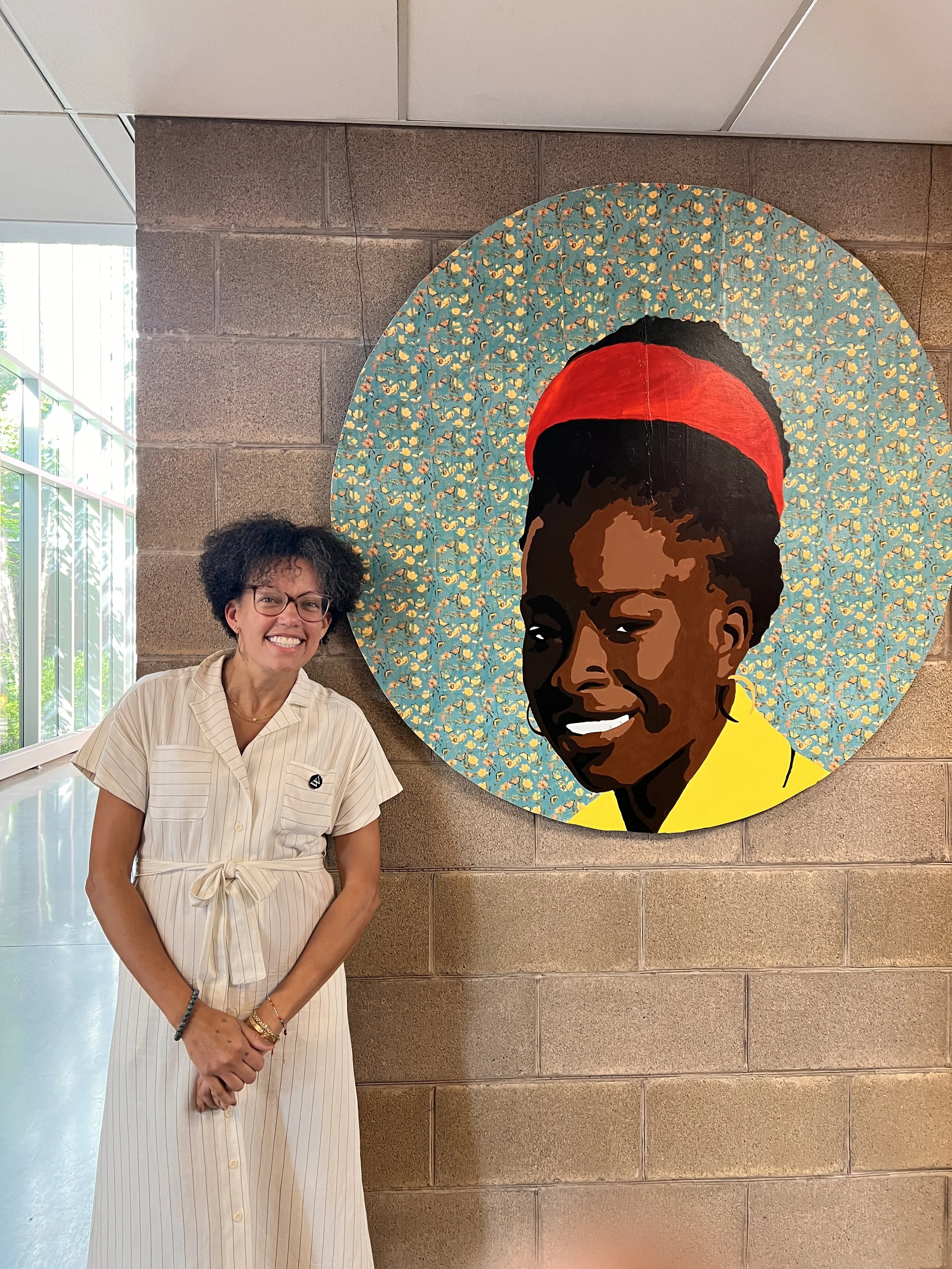
Jacqueline Archer-Nelson, Assistant Head of School for Student Life & Community Engagement Waterside School
Waterside offered me a glimpse of something many families tell me they are searching for: academic rigor and resources approaching a racial and cultural tipping point that can shift peer behavior and school culture.
But Waterside also revealed a familiar paradox.
Like the independent schools many RIISE families are navigating, access is constrained by economics and seat availability.
The difference is where the economic boundary falls.
At many independent schools, rising tuition can determine who has access—or how much financial aid an institution must be able and willing to provide to make that access possible.
Waterside flips the equation.
Its mission intentionally makes this education available to families below a particular economic threshold. Families above it aren't eligible. Add a deliberately small school community and far more interested families than available seats, and access remains limited.
Same coin. Two sides.
And that brought me right back to the independent schools so many RIISE families have already chosen—or are considering right now.
I am not ready to give up on those schools.
Nor am I willing to take them off the hook.
Choosing an independent school does not require us to accept the institution exactly as we found it.
Families can ask harder questions.
Who gets admitted? Who can afford to stay? Who teaches? Who leads? Who governs? Whose experiences inform the curriculum? Who feels culturally at home? And when families tell a school something isn't working, what happens next?
Schools should be asking questions, too.
What responsibility does an institution have for creating the community it says it values? How much of that responsibility is being placed upon the very students and families who are underrepresented within it?
Our children should develop confidence, agency, and the ability to advocate for themselves.
They should not have to carry the responsibility of making their schools more equitable.
That work belongs to adults and institutions.
And yet, we have to confront another reality.
At most independent schools, Black students remain a very small percentage of the student body. We can push those numbers. We should push.
But eventually, we run directly into economics.
When tuition can approach or exceed what many families earn in a year—and when that reality sits atop generations of racial disparities in wealth and access—how close can a tuition-dependent institution actually get to equitable representation without fundamentally changing something about the model itself?
And now there is another wrinkle.
The Treasury Department and IRS have proposed regulations that, if finalized, would change longstanding guidance concerning certain race-conscious practices at tax-exempt private schools—including provisions involving admissions, scholarships, and financial assistance.
Race-neutral approaches to expanding access would remain available. But the proposal adds another dimension to a question already complicated by economics:
If the tools available to address racial underrepresentation become more limited while the economic conditions contributing to that underrepresentation remain, what will meaningful progress require?
That question does not let independent schools off the hook.
Quite the opposite.
It asks us to take accountability more seriously.
Maybe it isn't enough to ask whether Black and Brown students feel like they belong once they arrive.
Perhaps we also have to ask:
Why aren't more eligible scholars able to get through the door?
And still, I don't believe the answer is simply to abandon independent schools.
RIISE has spent years helping families understand these institutions, make informed choices, advocate for their children, and fully leverage the educational investment they have made.
I believe deeply in that work.
Families currently choosing independent schools should continue asking more of them. Partner with them. Challenge them. Hold them accountable for the communities they say they want to create.
But believing in that work doesn't prevent us from asking what else might be possible.
Culturally affirming public-school models are worth watching.
Independent-school models like Waterside disrupt some of our assumptions about what these communities can look like.
And perhaps models don't exist yet.
What if we could build something else?
That's where this particular rabbit hole took me.
And that's where the conversation gets considerably more complicated.
Because building a rigorous, well-resourced Black independent school is one thing.
Creating it, funding it, sustaining it—and convincing enough families to choose it—is something else entirely.
I'm exploring that question more deeply in the inaugural essay from The Independent School OG, a new editorial space from RIISE for longer conversations about school choice, race, culture, access, and belonging.
Because there is one question I haven't been able to shake:
If we built more of the schools we say we want, would we choose them?
CONTINUE THE CONVERSATION →